Korean Bibimbap
Highlighted under: Heritage Food
Korean Bibimbap is a vibrant and nutritious dish, packed with a variety of vegetables, rice, and your choice of protein, all topped with a fried egg and spicy gochujang sauce.
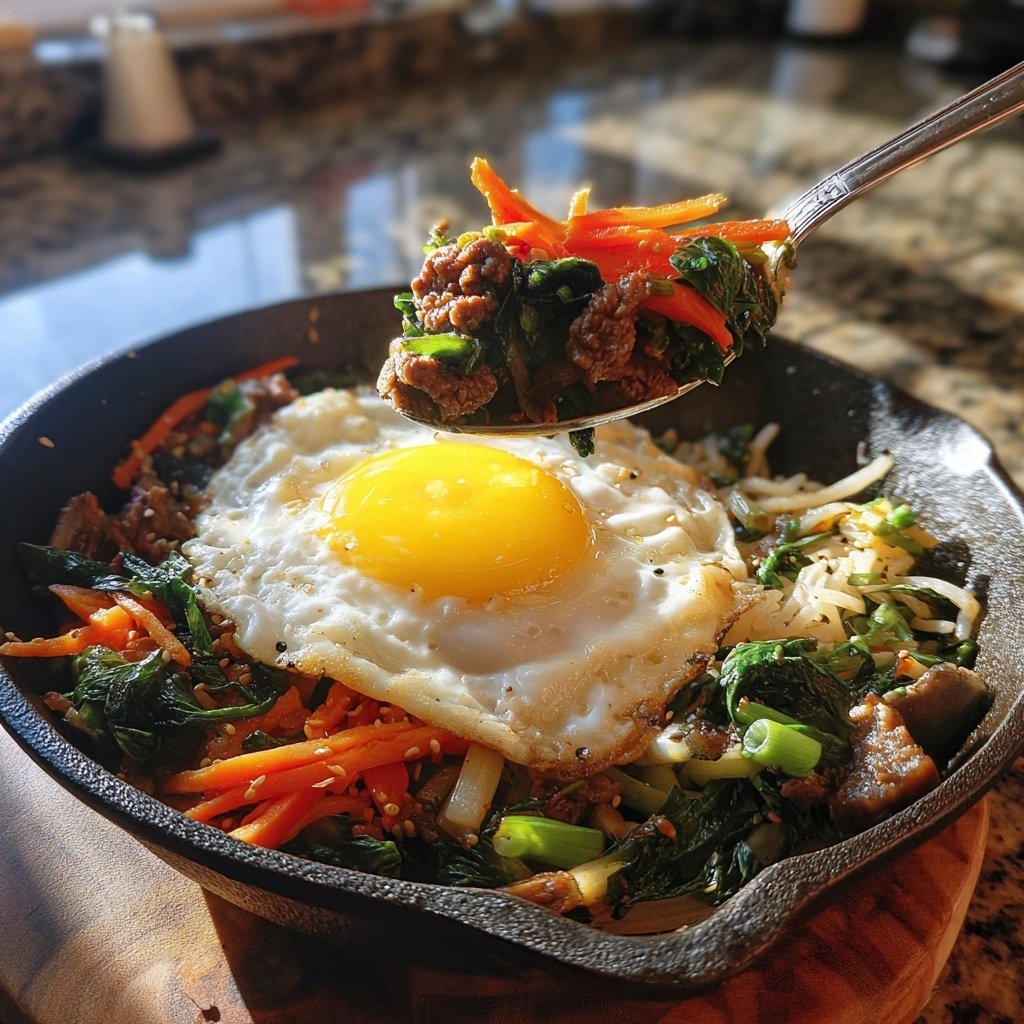
Korean Bibimbap is a beloved dish that showcases the vibrant flavors and colors of Korean cuisine. It is not only delicious but also nutritious, with a combination of fresh vegetables, protein, and rice that makes it a wholesome meal.
Why You'll Love This Recipe
- A colorful array of fresh vegetables
- Customizable to fit your dietary preferences
- Perfect balance of flavors with a spicy kick
The Origins of Bibimbap
Bibimbap is a traditional Korean dish that has evolved over centuries. Its name literally means 'mixed rice', reflecting the dish's core concept of combining various ingredients for a harmonious meal. Historically, bibimbap was served to kings during the Joseon Dynasty, symbolizing the importance of balance and harmony in Korean cuisine.
The dish showcases the beauty of Korean cooking, emphasizing fresh ingredients and vibrant colors. Each component of bibimbap carries its own flavor and nutritional benefits, making it a wholesome meal. The combination of vegetables, rice, and protein not only delights the eyes but also nourishes the body.
Customizing Your Bibimbap
One of the best features of bibimbap is its versatility. You can easily customize it to suit your taste preferences and dietary needs. Whether you prefer meat, seafood, or a vegetarian option, bibimbap can accommodate it all. Simply choose your favorite protein and mix it in for a satisfying meal.
The vegetable selection can also be tailored. While this recipe highlights spinach, carrots, and zucchini, feel free to experiment with other seasonal vegetables like bell peppers, radishes, or even avocado. This adaptability not only makes bibimbap delicious but also encourages a creative approach to cooking.
Serving Suggestions
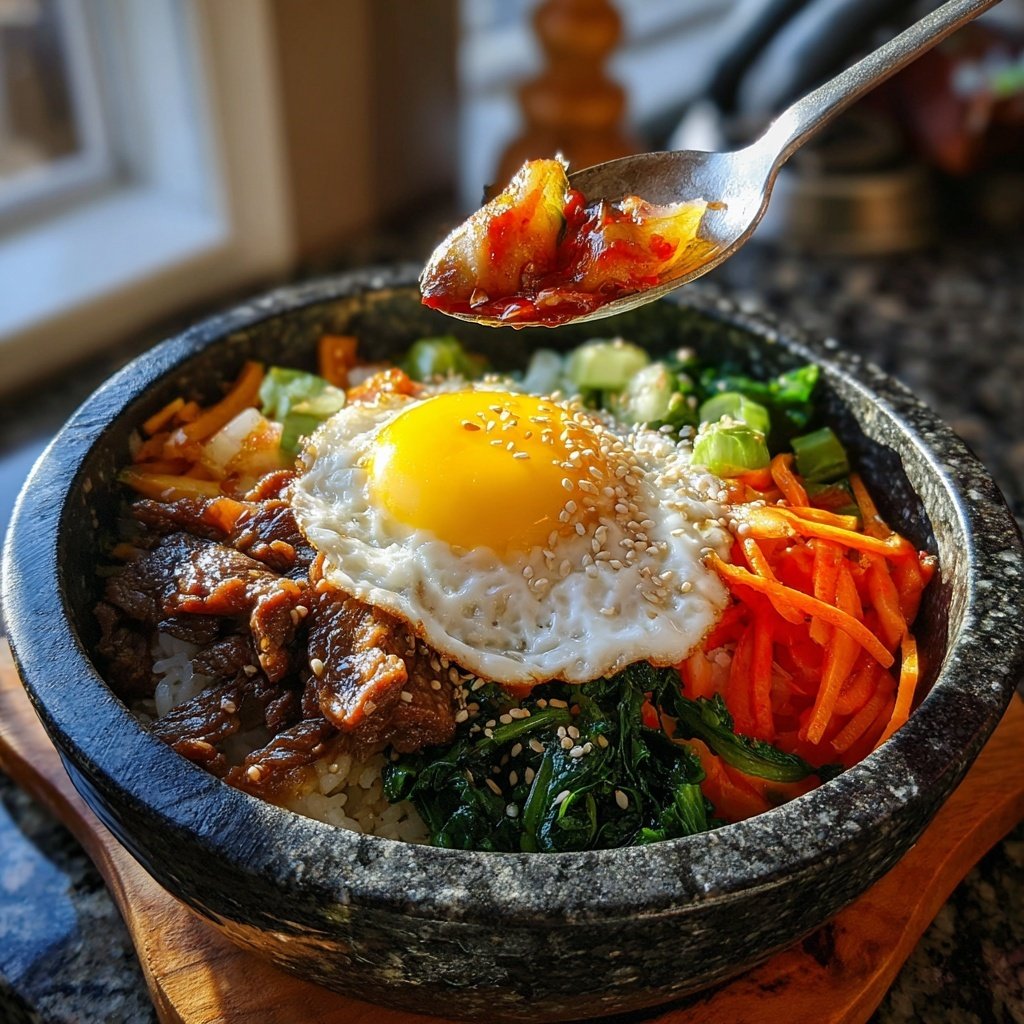
Bibimbap is often served in a hot stone bowl known as 'dolsot', which helps to create a crispy rice layer at the bottom. If you don't have a dolsot bowl, a regular bowl will work just fine. To enhance the experience, serve your bibimbap with a side of kimchi and pickled vegetables, which add a tangy contrast to the dish's flavors.
For those who enjoy a bit of heat, consider adding extra gochujang or even a sprinkle of gochugaru (Korean red pepper flakes). This can elevate the spicy kick and make your bibimbap even more delightful. Remember, the key to a great bibimbap lies in the balance of flavors, so adjust the ingredients to your liking.
Ingredients
For the Bibimbap
- 2 cups cooked white rice
- 1 cup spinach, blanched
- 1 cup bean sprouts, blanched
- 1 carrot, julienned
- 1 zucchini, julienned
- 4 mushrooms, sliced
- 4 eggs
- 4 tablespoons gochujang (Korean chili paste)
- 1 tablespoon sesame oil
- 1 tablespoon vegetable oil
- Salt and pepper to taste
Optional Protein
- Grilled chicken
- Beef bulgogi
- Tofu
Feel free to customize the ingredients based on your preferences or what you have on hand!
Instructions
Prepare the Vegetables
In a skillet, heat vegetable oil over medium heat. Sauté the zucchini, carrots, and mushrooms separately until tender. Season with salt and pepper. Set aside.
Cook the Eggs
In the same skillet, fry the eggs sunny-side up until the whites are set but the yolks are still runny.
Assemble the Bibimbap
In a large bowl, arrange the cooked rice as the base. Top with the sautéed vegetables, blanched spinach, and bean sprouts. Add the protein of your choice if using.
Add the Egg and Sauce
Place the fried egg on top and drizzle with sesame oil and gochujang. Mix everything together before serving.
Enjoy your delicious and colorful Bibimbap!
Pro Tips
- For a more authentic taste, use short-grain rice and feel free to add other vegetables like radish or cabbage.
Nutritional Benefits of Bibimbap
Korean bibimbap is not only a feast for the eyes but also a powerhouse of nutrition. With a variety of vegetables, it offers a rich source of vitamins, minerals, and antioxidants. Spinach, for instance, is packed with iron and calcium, while carrots provide beta-carotene, which is beneficial for eye health.
The inclusion of protein, whether from meat or tofu, adds essential amino acids to the dish, making it a complete meal. The healthy fats from sesame oil contribute to heart health, while gochujang introduces capsaicin, known for its metabolism-boosting properties. Overall, bibimbap is a balanced dish that supports a healthy lifestyle.
Storing and Reheating Leftovers
If you find yourself with leftover bibimbap, storing it properly can help maintain its freshness. Allow the dish to cool completely before transferring it to an airtight container. It can be stored in the refrigerator for up to three days. When reheating, it's best to do so on the stove to revive the texture of the rice and vegetables.
To reheat, simply add a splash of water to the skillet and cover it to steam the ingredients while keeping them moist. Alternatively, you can use the microwave, but be cautious not to overheat, as it may result in soggy rice. Enjoying bibimbap the next day can be just as delightful as the first!
Questions About Recipes
→ Can I make Bibimbap vegetarian?
Yes! Simply omit meat and use tofu or extra vegetables as your protein.
→ What can I substitute for gochujang?
You can use sriracha or a mix of chili powder and soy sauce, but it won’t have the same depth of flavor.
→ How do I store leftovers?
Store leftovers in an airtight container in the fridge for up to 3 days. Reheat before serving.
→ Can I use brown rice instead of white rice?
Absolutely! Brown rice will add more fiber and a nuttier flavor to the dish.
Korean Bibimbap
Created by: Cleo Winter
Recipe Type: Heritage Food
Skill Level: Intermediate
Final Quantity: 4 servings
What You'll Need
For the Bibimbap
- 2 cups cooked white rice
- 1 cup spinach, blanched
- 1 cup bean sprouts, blanched
- 1 carrot, julienned
- 1 zucchini, julienned
- 4 mushrooms, sliced
- 4 eggs
- 4 tablespoons gochujang (Korean chili paste)
- 1 tablespoon sesame oil
- 1 tablespoon vegetable oil
- Salt and pepper to taste
Optional Protein
- Grilled chicken
- Beef bulgogi
- Tofu
How-To Steps
In a skillet, heat vegetable oil over medium heat. Sauté the zucchini, carrots, and mushrooms separately until tender. Season with salt and pepper. Set aside.
In the same skillet, fry the eggs sunny-side up until the whites are set but the yolks are still runny.
In a large bowl, arrange the cooked rice as the base. Top with the sautéed vegetables, blanched spinach, and bean sprouts. Add the protein of your choice if using.
Place the fried egg on top and drizzle with sesame oil and gochujang. Mix everything together before serving.
Extra Tips
- For a more authentic taste, use short-grain rice and feel free to add other vegetables like radish or cabbage.
Nutritional Breakdown (Per Serving)
- Calories: 550 kcal
- Total Fat: 18g
- Saturated Fat: 4g
- Cholesterol: 210mg
- Sodium: 600mg
- Total Carbohydrates: 85g
- Dietary Fiber: 5g
- Sugars: 5g
- Protein: 16g